

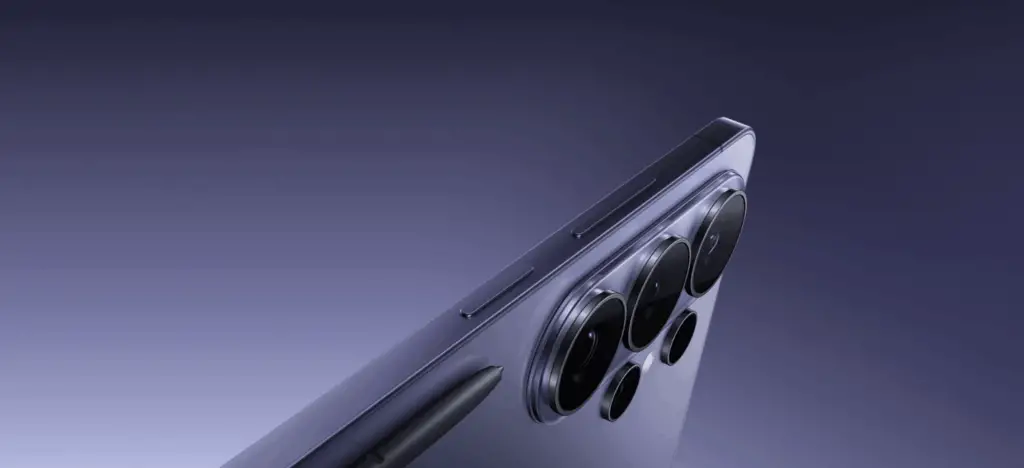
Samsung’s Galaxy S series has long set the standard for premium Android displays. From the S23 Ultra to the S25 Ultra, brightness, anti-reflective coatings, and color accuracy have improved every year.
Now, early discussions around the Galaxy S26 Ultra’s new Privacy Display feature are raising serious questions.
Is Samsung’s new “Directional Pixel” technology a breakthrough — or does it introduce a permanent hardware compromise?
This in-depth analysis breaks down:
- How Privacy Display actually works
- Whether brightness and resolution drop in real use
- If viewing angles are permanently affected
- Anti-reflective coating concerns
- Who should avoid the S26 Ultra
- Whether this is a real flaw or misunderstood innovation
To understand how this technology compares to other privacy display implementations, read:
Directional Pixel Smartphone Displays Explained: How Privacy Hardware Really Works
What Is Galaxy S26 Ultra Privacy Display?
Samsung’s new Privacy Display feature is designed to reduce side-angle visibility without requiring a physical privacy screen protector.
Unlike software-based dimming filters, this appears to use a hardware-level directional pixel layer embedded within the AMOLED panel.
When activated, the display narrows the light projection angle so people sitting beside you see a darker, limited image.
This is similar in concept to privacy laptop screens — but integrated directly into the panel.
Brightness & Resolution Impact (Privacy Mode ON)
According to early user reports and display analysis discussions, the S26 Ultra appears to use a sub-pixel masking system.
Does Privacy Display Drain Battery?
How It Likely Works
- Half of the sub-pixels are dimmed or directionally restricted.
- Light emission is narrowed.
- Side-angle projection is reduced.
Possible Results:
- Lower peak brightness
- Slight reduction in effective resolution
- Increased power draw under certain conditions
If true, this means when Privacy Mode is ON, you are not seeing the full display potential.
However, this is expected behavior in directional pixel systems — it is the trade-off required for privacy.
The Bigger Concern: Permanent Hardware Trade-Off?
The more serious allegation is that even with Privacy Mode OFF, viewing angles may be worse than the previous S25 Ultra.
The claim:
Because the display has a physical light-shielding layer embedded in the panel, some light diffusion is permanently restricted.
Potential effects include:
- Slight white color shift at mild angles
- Side-view dimming compared to S25 Ultra
- Less uniform brightness across angles
If accurate, this would mean the privacy hardware cannot be completely disabled — only mitigated.
That would represent a structural design compromise.
Comparing Galaxy S25 Ultra vs S26 Ultra Display Behavior
The S25 Ultra was praised for:
- Exceptional viewing angles
- Industry-leading anti-reflective coating
- Minimal color shift
If the S26 Ultra introduces:
- Noticeable angle dimming
- Slight color inconsistency
- Reduced reflectivity performance
Then this marks a philosophical shift:
Samsung prioritizing privacy functionality over display purity.
Galaxy S26 Ultra vs S25 Ultra Display Comparison
What About the Anti-Reflective Coating?
Another reported concern is that the new coating may not match the S25 Ultra’s clarity.
Possible reasons:
- Modified outer layer to support directional light control
- Different light diffusion treatment
- Trade-offs to balance privacy and reflection
Without lab measurements, it’s too early to confirm.
But if glare handling worsens, outdoor readability could be affected.
Is This Actually a Deal-Breaker?
That depends on your usage.
It Might Be a Deal-Breaker If You:
- Frequently share your screen with others
- Watch media from side angles
- Care deeply about color accuracy
- Use your phone in group settings
It Might Be Perfect If You:
- Travel frequently
- Work in public spaces
- Value shoulder-surfing protection
- Handle confidential information
Real-World Perspective: Are People Overreacting?
Every hardware innovation introduces trade-offs.
When Samsung introduced curved edges, durability decreased.
When Apple introduced OLED, PWM flicker became a concern.
Privacy Display is similar.
The real question is:
Are the viewing angle differences measurable — or noticeable?
Until proper lab tests compare:
- Viewing angle luminance drop
- Delta E color shift
- Peak brightness vs S25 Ultra
The discussion remains theoretical.
Expert Take
If the hardware layer permanently alters light diffusion, then:
This is not a bug.
It is a design philosophy change.
Samsung may be redefining what a flagship display prioritizes.
Privacy as a default hardware feature may become standard across the industry.
The S26 Ultra might simply be the first step.